
1. Start with the purpose of the order
Before you send through artwork, be clear about why you need the shirts. A staff set for a Pinetown workshop does not need the same print setup as a school fun run in Ballito or a club order for weekend events in Durban Central. The purpose affects the garment type, print position, ink choice and how many sizes you should carry.
Think about where the shirts will be worn, how often they will be washed, and whether they need to hold up in hot weather, coastal humidity, or long days on site. If the order is for outdoor use, darker colours and busy print areas may need a little more planning. For uniform use, keep the design simple and easy to read from a few metres away.
- State the event, team, school or business use
- Confirm if the shirts are for daily wear or a once-off event
- Choose whether the look should be formal, sporty, or promotional
- Note any deadline tied to a match, launch, fundraiser or matric trip
2. Choose the garment type and sizes early
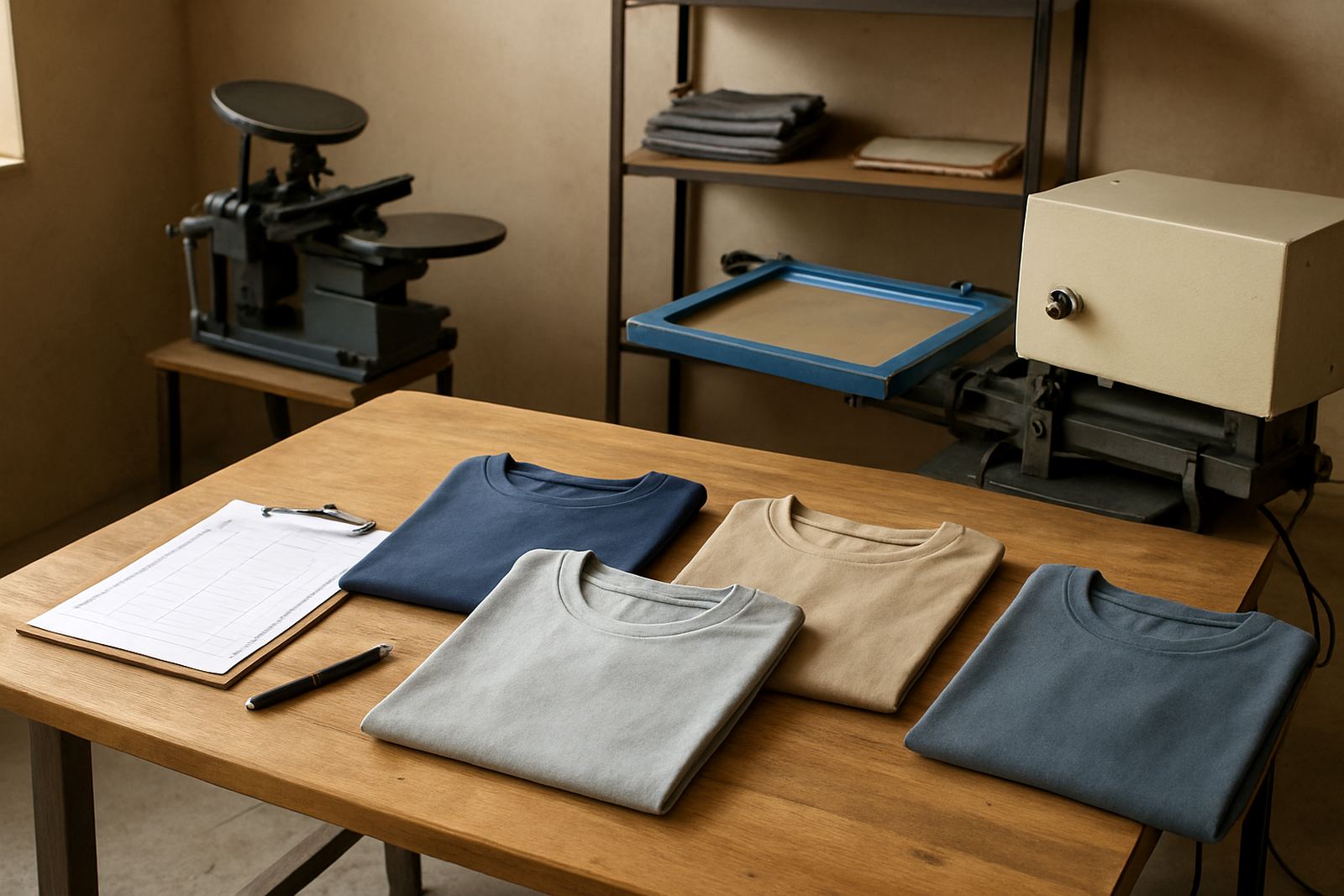
The shirt itself matters just as much as the print. Cotton is comfortable and works well for general wear, while blended fabrics can dry faster and suit active use. If you need printed shirts for KZN schools or clubs, it helps to decide early whether you want short sleeve, long sleeve, fitted, relaxed fit, or a heavier shirt for cooler months.
Size planning is where many orders slow down. A good spread usually includes a few extra smalls and extra larges, with careful attention to the main sizes your group actually wears. If you are ordering for staff across different branches, ask each person to confirm their size instead of guessing. That saves reprints and reduces awkward swaps later.
- Decide on shirt colour before artwork is finalised
- Collect sizes from each wearer, not from memory
- Allow for 5 to 10% extra in the most common sizes
- Check if ladies fit, unisex fit, or kids sizes are needed
3. Prepare artwork that prints cleanly
Good print results start with good artwork. If your logo is low quality, blurry or pulled from a website, it may need redrawing before it can be separated properly for screen printing or digital production. Vector artwork is best for clean edges and sharp lines, especially on larger front prints or detailed back logos.
If you do not have print-ready files, send what you have and let the artwork team check it first. We can help with artwork checking, vector redrawing and colour separation so the image holds up on fabric. Please include the correct spelling of names, slogans and school details, because one missing letter can hold up the whole run. A simple proof stage can save time and cost later.
- Send high-resolution artwork where possible
- Provide logos in clear colours, not screenshots if you can avoid it
- Confirm spelling, phone numbers and wording before approval
- Tell us if you need one-colour, two-colour, or full colour print
4. Decide where the print should go
Placement changes the look and the price of the job. A small left chest print works well for staff shirts and uniforms. A larger front print suits promos and events. Back prints are useful for sponsor details, team names or contact information. Sleeve prints can be added when a shirt needs extra branding, but they are not always necessary.
Before production starts, it helps to mark the exact print positions. That includes the size of the logo, how far down the chest it should sit, and whether the back print should sit high or low. For caps, banners and signage we use different setups, but the same principle applies: the layout must match the item. With shirts, even a small shift can make the whole order look unbalanced.
- Choose front, back or sleeve placement
- Decide if the print must be large, medium, or small
- Let us know if names or numbers need to be added
- Ask for a test print if the artwork is unusual or detailed
5. Plan the run size, timing and approval steps
Whether you need 20 shirts for a club day or 500 for a company rollout, the run size affects production time. Smaller jobs can move quickly but still need artwork checks, screen making and print setup. Larger orders need more careful staging, drying time and packing. If your deadline is tight, say so upfront so we can advise what is realistic.
It also helps to build in a little time for approval. Once the artwork is checked and the print layout is set, a proof or sample can be prepared before the full run starts. That is especially useful when you are ordering for schools, corporate events or team kit where several people need to sign off. In Durban, load-shedding can also affect production windows, so early planning gives you more breathing room.
- Confirm the final quantity before production starts
- Allow time for artwork approval and any changes
- Build in a buffer for weather, delivery or power interruptions
- Tell us if you need courier delivery to another town
6. Use the final checklist before you place the order
Right before you submit the order, run through a final checklist. This is the easiest way to avoid missing sizes, wrong colours or last-minute confusion. If you are ordering from Umbilo, Durban Central, Berea, Westville, Pinetown, Amanzimtoti, Ballito or Pietermaritzburg, courier delivery can be arranged nationwide, so you can plan around where the shirts must arrive, not just where they are printed.
Our team handles everything from screen making and emulsion coating to film output, screen exposure, washout and touch-up, screen registration, test printing and screen storage. That means the order is checked step by step before it reaches dispatch. If you are not sure about one detail, ask first. It is easier to correct a design before printing than after 100 shirts are already done.
- Check the garment colour and size list
- Confirm artwork spelling and logo version
- Approve print position and print size
- Check the delivery address and contact person
- Keep a copy of the final approved order details
When the basics are clear, a T-shirt order becomes straightforward. Good planning helps the print look better, saves time, and makes sure everyone gets the right shirt on the day they need it.