
Why a 20 shirt order is not the same as 500
With small runs, most of the cost sits in setup. Artwork checking, vector redrawing, colour separation, film output and screen making all need to happen before the first print is pulled. That work takes nearly the same time whether you want 20 shirts or 200, so the unit cost is higher on short runs.
Once the order grows, the setup cost spreads across more items and the price per unit drops. On larger jobs, planning becomes more important too, because you need enough stock, enough drying space and enough time for test printing and registration checks. If the job is for a school fete in Durban Central or a club order going to Pietermaritzburg, we plan the run so the delivery date is realistic and the finish stays tidy.
What changes in the workshop on small runs
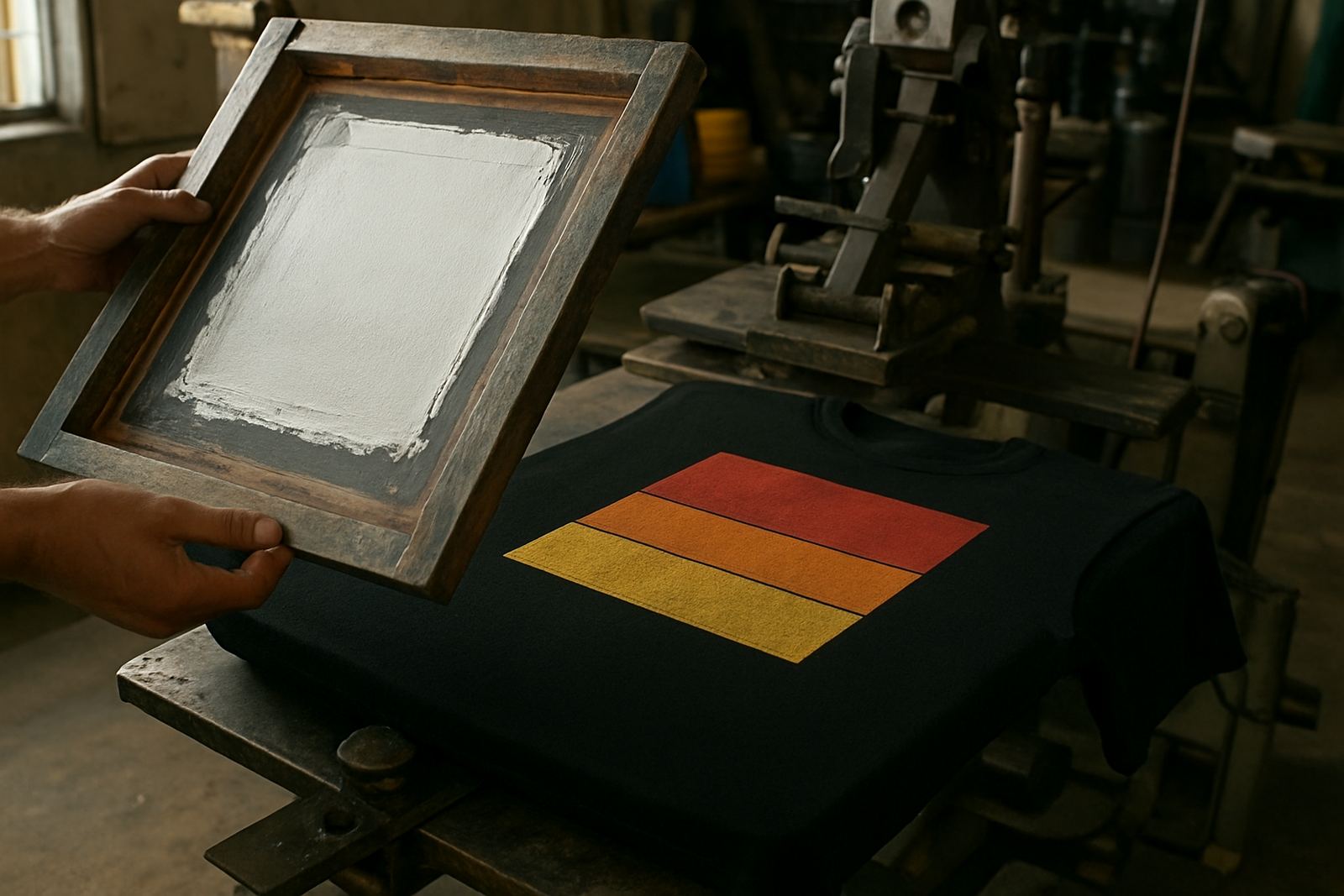
Short runs are quick on the calendar but still detailed in the workshop. Even for a few caps or a small batch of T-shirts, the screen must be stretched properly, coated with emulsion, exposed, washed out and touched up before printing starts. There is no shortcut if you want clean edges and even ink coverage.
- Artwork may need minor correction before exposure.
- Each colour needs its own screen and registration check.
- Test printing helps catch small issues before the full run.
- Short runs often use more time per item because setup is repeated on a smaller scale.
Small orders suit trial merchandise, event stock, staff shirts, or a new school club that is still testing a logo. They also work well when a client only needs a few replacements after load shedding damaged stock or a previous supplier used the wrong sizing.
Why bulk orders lower the unit cost
Bulk printing is where setup gets shared across quantity. If the artwork is approved, the colours are final and the screen storage is sorted, the press can keep moving for longer with less interruption. That is why the unit cost drops when the order gets bigger.
The bigger the run, the more important it is to lock down details early. Shirt sizes, garment colours, print positions, and delivery splits all need to be clear before production starts. A 300 shirt order for a KZN school, for example, may need mixed sizes for learners and staff, while a 1,000 banner campaign may need staggered delivery to Ballito, Westville and Amanzimtoti. Good planning stops waste and avoids rework.
How lead times change when the order size changes
Lead time is not just about printing speed. It includes artwork approval, screen making, curing, drying and dispatch. A small order can sometimes move fast if the artwork is ready and the press schedule is open. But if the design needs colour separation or a vector redraw, the clock starts before anything is printed.
Large orders need a wider production window because drying and packing take time, especially in humid Durban weather. Coastal moisture can slow certain stages, and during load shedding we have to sequence the work so screens, print tables and drying space are used in the right order. That is one reason bulk work is best booked early, not left for the last minute.
- Simple one colour jobs are quicker to prepare than multi-colour designs.
- Supplied print-ready artwork reduces back-and-forth.
- Bulk orders need more time for counting, packing and dispatch.
- Courier delivery nationwide should be factored in before the event date.
Choosing the right print method for the run size
Screen printing is often the best fit for repeated logos, larger quantities and strong colour coverage. Digital printing can suit certain smaller runs or detailed artwork where the design has many shades. The right choice depends on the item, the number of colours, the fabric or surface, and how the finished product will be used.
For caps, banners and signage, the surface and shape matter as much as the quantity. A flat banner for a school fundraiser is different from a curved cap front or a sign for a shop in Berea. We look at the job as a whole, then recommend the method that gives the best finish without pushing the price too high.
A Durban example: one club, two order sizes
Take a sports club in Umbilo. The committee might start with 24 T-shirts for committee members and coaches, then later place a bulk order for 240 shirts once fundraising is confirmed. The first order is about getting the artwork right and keeping costs manageable for a small group. The second order is about consistent colour, matching sizes and faster throughput.
In the small order, the client may accept a slightly higher price per shirt because the quantity is low. In the bulk order, they usually want firm pricing, clear cut-off dates and a delivery plan that gets stock to Durban Central, Pinetown and surrounding areas without delays. The production approach changes, but the goal stays the same: a clean print and stock that arrives on time.
What to prepare before you ask for a quote
The more complete the brief, the easier it is to price the job properly. A good quote starts with quantity, garment type, print position and artwork quality. If you already know the size breakdown and delivery area, that helps too. It also helps to say whether you need screen storage for repeat orders later in the season.
- How many items do you need now, and how many later.
- Which product you want printed, such as T-shirts, caps, banners or signage.
- How many colours are in the logo or message.
- Whether the artwork is final or still needs checking and redrawing.
- Where the stock must go, including courier delivery if needed.
At Screen Spectrum, we handle the full setup in-house from artwork checking to screen storage, so the planning stays under one roof. That keeps the process practical for schools, clubs and businesses across KZN, whether the order is small or bulk.