What corflute does well on short-term jobs
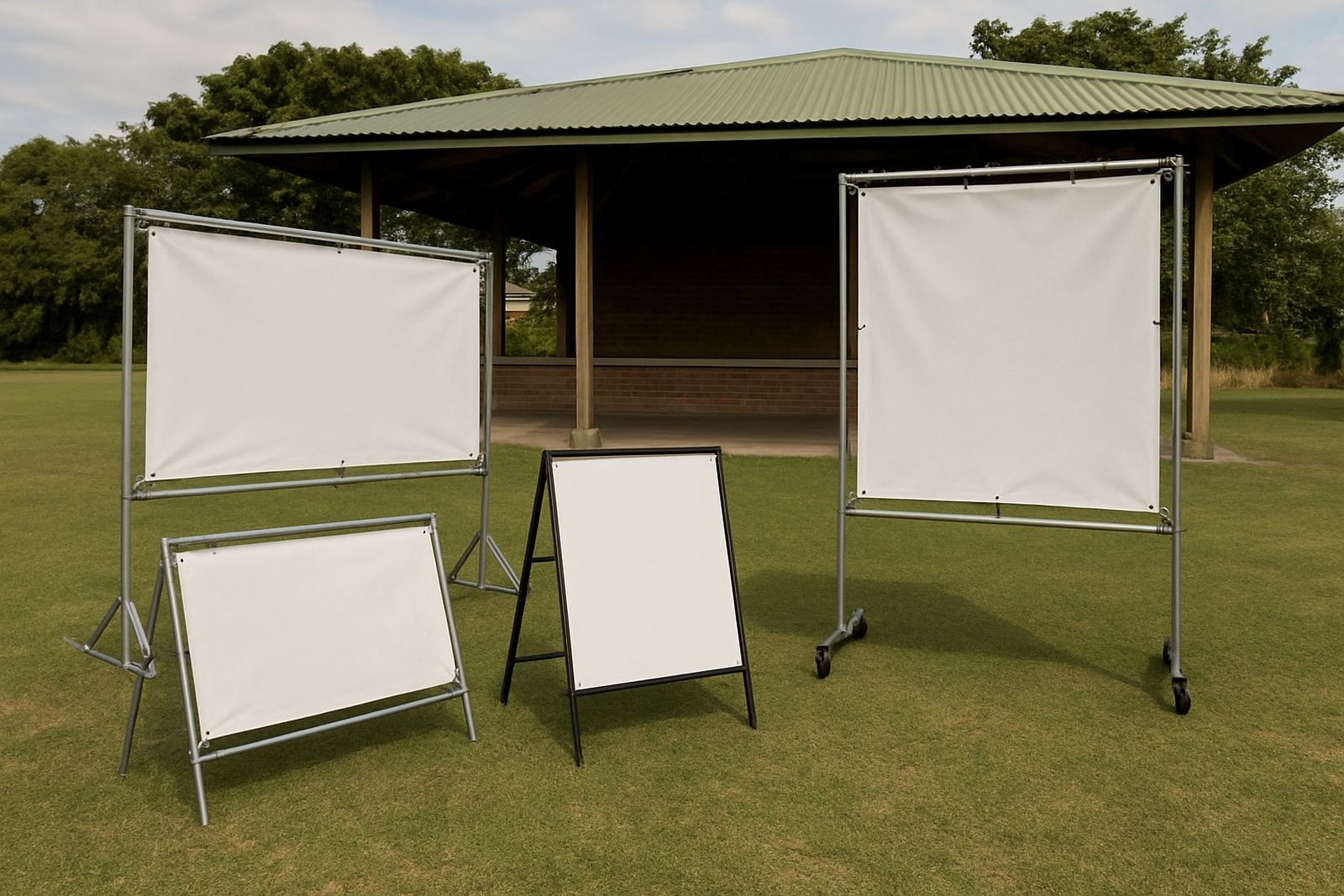
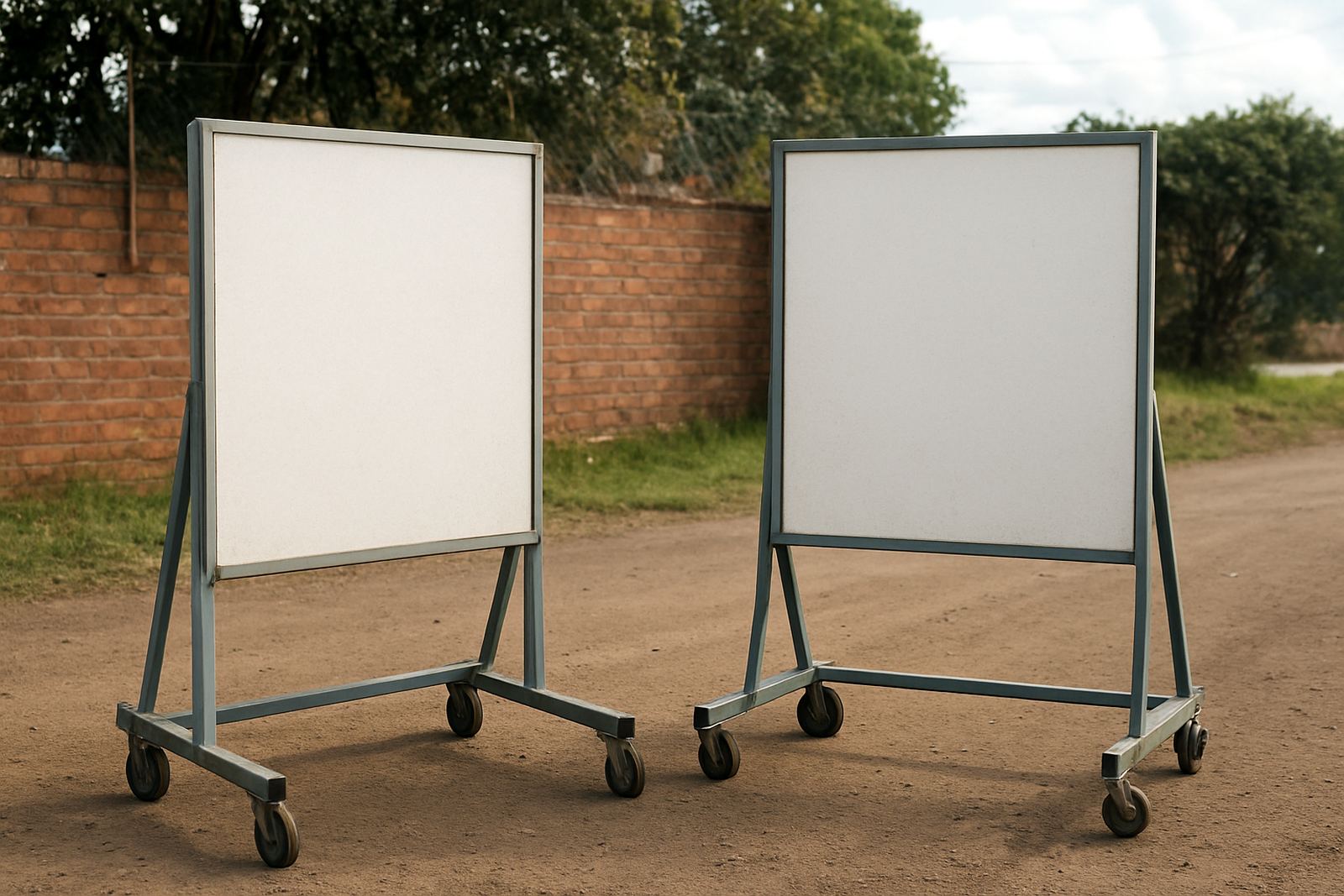
Corflute is the lighter option. It is a fluted plastic sheet that works well for temporary notices, event signage, school functions, estate agents, election boards and site directions. Because it is light, it is easy to move around, cable-tie to fencing, or mount on simple frames without much strain.
For KZN conditions, corflute is useful when the sign only needs to stay up for a few weeks or months. It handles rain and sun better than paper, but it is still best treated as a short-term material. In strong wind it can flex, and if it is mounted badly it may bow or chatter. That is why fixing points matter just as much as the print.
- Lightweight and easy to install
- Best for short campaigns and temporary notices
- More affordable for larger runs
- Good for fence mounting and site boards
When PVC gives you a more solid finish
PVC sign board is the stronger choice when the sign must look cleaner and last longer. It has a firmer feel, smoother face and better rigidity than corflute, so it suits shop notices, directional signs, menu boards, safety notices and branded displays where presentation matters. If the sign will be viewed up close, PVC normally gives a neater result.
In humid Durban conditions, PVC also copes well indoors and outdoors when it is fixed properly. It is a better option for places where the board must stay flat and tidy, such as school reception areas, club entrances or business gates. It costs more than corflute, but the extra spend is often worth it for a job that must hold its shape.
- More rigid and presentable
- Better for long-term use
- Suitable for close viewing
- Good for permanent notices and branded displays
How Durban weather changes the choice
Durban weather is hard on signs. Coastal humidity, afternoon rain, strong sun and wind off the sea all affect how long a board keeps its shape and colour. A sign at Umbilo or along the Berea may face different conditions from one in Pinetown, but the same basic rule applies: the longer it must last, the more the material matters.
Corflute can do fine for a quick promotion, but if the job is going to sit outside through summer, a firmer board is usually safer. UV exposure fades print over time, and wind load can loosen a weak fixing. For exposed corners, open fencing or roadside sites, it is worth planning the board size, mounting points and print method together rather than choosing material only on price.
- Use corflute for temporary outdoor messaging
- Use PVC where the sign must stay flat and neat
- Allow for wind, sun and rain in open areas
- Choose fixing points that suit the site
Where each material makes the most sense
There is no single winner. Corflute and PVC serve different purposes, and the best sign is the one that fits the job. A school may use corflute for sports day directions and PVC for term notices near the office. A club might choose corflute for a weekend tournament and PVC for a membership board at the entrance.
Businesses often mix both. Corflute is handy for specials, launch events and temporary promotions. PVC is better for name boards, fixed directions, operating hours and safety messages. If you are not sure which way to go, ask what the sign must do in the first place. That simple question saves money and avoids replacing the board too soon.
- Corflute: events, short campaigns, temporary notices
- PVC: long-term branding, reception signs, fixed directional boards
- Schools: use both for different areas and timeframes
- Clubs and businesses: match the board to the message
Print quality, cut size and fitting details matter
The material is only part of the job. Artwork, colour separation and clean print output affect how sharp the sign looks. If the design has small text or fine detail, a smooth board with proper print setup helps the message stay readable. Large bold lettering works better on both materials than crowded layouts with too much information.
Size also matters. A narrow passage sign needs different handling from a 1,200 mm by 900 mm roadside board. Bigger signs may need extra support, while smaller boards can be mounted more simply. It is worth checking the final location before print, especially where there is limited wall space, uneven fencing or municipal rules about what can be fixed outside. A sign that is easy to install is usually cheaper to maintain later.
A practical Durban example for schools and firms
Consider a school in Durban Central needing open day signs, parking directions and a sponsor board. Corflute works well for the temporary arrows and event notices because those can come down after the weekend. The sponsor board, which may stay in place through the term, is better suited to PVC so it stays flat and presentable.
The same logic applies to a Pinetown business park or a Westville sports club. A Saturday promotion can be printed on corflute and delivered quickly, while a permanent entrance sign benefits from PVC. If the site is exposed to sea air, sun or regular handling, it is worth choosing the material with the longer service life. The cheapest board upfront is not always the best value over a year.
- Temporary message: corflute
- Permanent message: PVC
- High-traffic site: choose the firmer board
- Mixed use: combine both materials where needed