What the Pinetown site needed
The client was a manufacturing business in Pinetown doing a wider refresh of its factory floor, yard and access areas. Their main concern was simple: people had to move through the site quickly without confusion, while every safety point stayed visible from a distance.
The brief covered directional boards for staff and visitors, plus safety notices for entry points, pedestrian routes, storage areas and restricted zones. Some signs needed to face direct sunlight, others sat under roofed walkways, so the material choice had to suit both exposure and indoor use. The premises also ran on a tight schedule, so the sign set had to be produced in stages and installed with minimum disruption.
The site is a busy one, with forklifts, loading activity and regular vehicle movement. That meant the signs could not be too small or overworked. We kept the wording short, the arrows bold and the colour coding consistent across every board.
Materials and specs we supplied
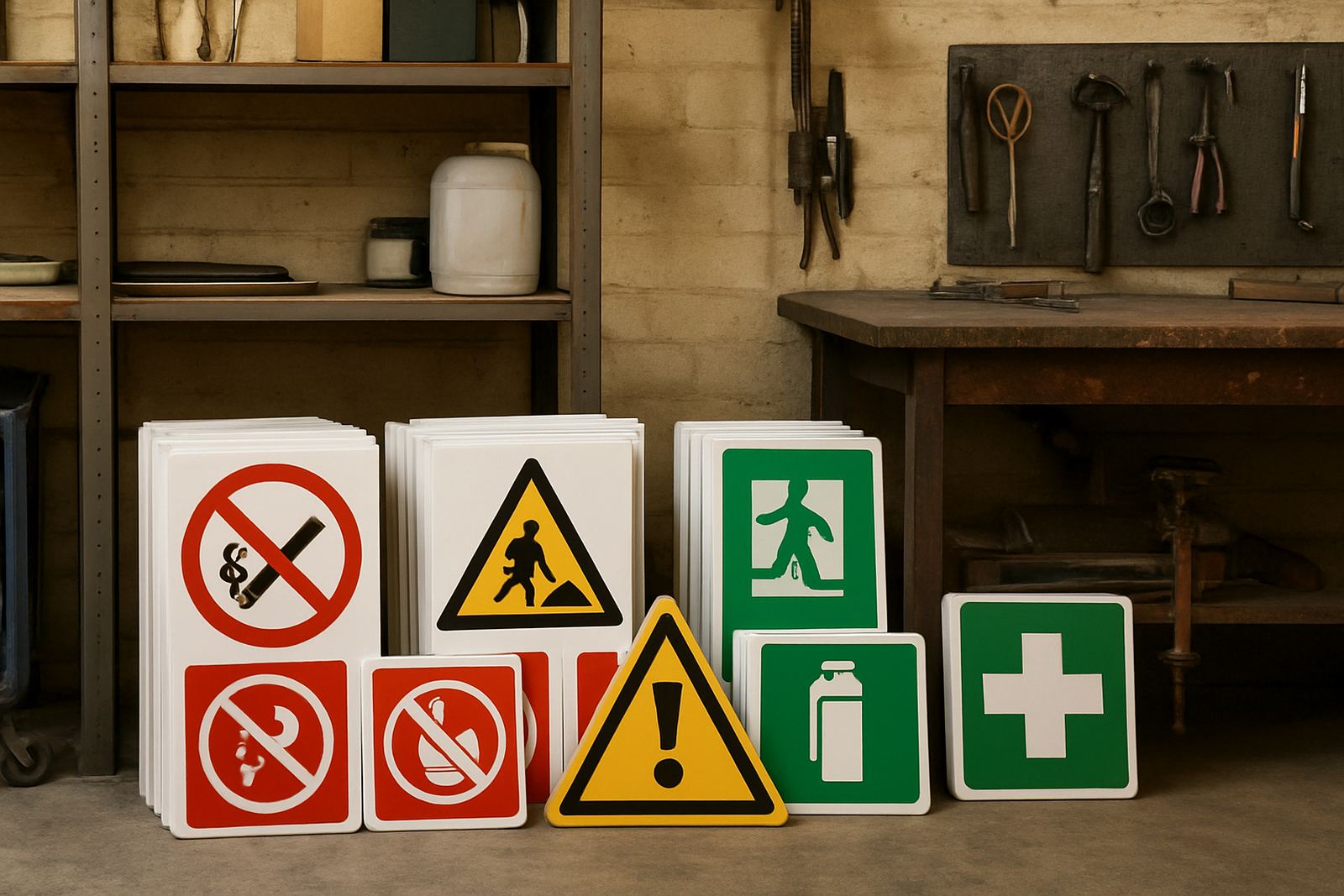
We prepared the sign set as a mixed batch, with larger direction boards for outside movement routes and smaller notice signs for wall mounting and internal points. The boards were made for daily industrial use and for easy reading at a glance, even from across a driveway or warehouse bay.
- Rigid sign boards in 3 mm aluminium composite for outdoor areas
- Smaller interior boards in 1.6 mm aluminium for wall fixing
- UV stable print for colour hold in strong KwaZulu-Natal sun
- High contrast safety colours with clear arrows and icon placement
- Standard sizes used across the site for visual consistency
- Pre-drilled fixing points where needed for quicker installation
Where the board had to sit near dust, heat or regular cleaning, we finished it in a way that made wiping down easier. The surface stayed readable and did not show up fingerprints or light scuffing as quickly. That matters on factory walls where signs can get handled during maintenance or moved around during layout changes.
Artwork checks and production control
Because factory signs need to be exact, we checked every layout before production. That included wording, arrow direction, spelling, spacing and the order of information on each board. The client had a few internal terms and location names that needed to be matched properly, so we confirmed those before going ahead.
Our artwork team prepared the files for clean output and made sure the colours stayed strong across the full batch. For this kind of job, a slight shift in tone can make one sign look different from the next, so we kept the set consistent. The client also wanted a few boards grouped by department, which helped us keep the numbering and route markers in a logical sequence.
- Artwork checking before print to catch errors early
- Colour separation for sharp, readable blocks of colour
- Film output prepared for accurate screen work where needed
- Test prints used on selected items before the full run
For the larger boards, we used a production method that kept edges crisp and the lettering easy to read from a distance. That was important in the yard where drivers only have a few seconds to check a route. No one wants to double back because a sign is too small or unclear.
How the job ran over two weeks
The full project took two weeks from final sign-off to dispatch. Week one was used for artwork checks, layout approvals and production setup. We then moved into print, curing and finishing, while the sign list was split into the order the client needed on site.
Week two covered final checks, packing and delivery planning. The factory had active shifts running, so timing mattered. We coordinated the release of the boards in a way that allowed the client to fit the signs without blocking access roads or interrupting loading. That kind of planning saves time on site and keeps the job moving without people having to work around loose panels all day.
The client was also dealing with the usual Durban conditions, including humidity and fast changes in weather. In that environment, boards need to be dry, flat and ready to mount. We allowed extra time for curing and handling so the final items would not curl or mark before delivery.
Delivery to the site and practical placement
Once the sign set was ready, we arranged delivery to Pinetown and packed the boards by area for easier handling on arrival. Directional boards went together, safety boards went together and smaller notices were grouped by mounting point. That made it much easier for the client to get the right sign to the right location without opening every package.
The placement plan focused on the spots people actually use: the entrance gate, vehicle approach points, pedestrian walkways, storeroom access, loading areas and staff movement routes. We kept the language direct and made sure the boards could be read quickly by both workers and visitors. In an industrial setting, speed and clarity matter more than long explanations.
- Packed by zone for quick sorting on site
- Boards sized for both wall mounting and outdoor fixing
- Clear directional arrows to reduce wrong turns
- Readable from vehicle height and foot traffic level
The result was a cleaner, more organised site with sign boards that actually helped the flow of movement instead of just filling wall space. That is what the client wanted and it is what the job delivered.
Results and what we would repeat
The finished sign set gave the premises a sharper, more controlled look while improving day to day movement around the factory. Staff could find the right areas faster, visitors had clearer guidance and the safety notices were visible where they needed to be. The client also noted that the matching sizes and repeated colour blocks made the whole site feel more orderly.
If we were doing the same project again, we would keep the same approach: short wording, strong contrast, and a staged production run that matches the site layout. For industrial clients in Pinetown, Durban or elsewhere in KZN, that method works well because it reduces confusion and keeps the sign set easy to maintain. It also means replacement boards can be matched later without starting from scratch.
For factory and warehouse projects, we always recommend a quick site list before production starts, especially where there are multiple entrances or changing work zones. That small step helps avoid reprints and keeps the finished set aligned with the way the premises actually operate.
Key facts
| Client type | Industrial manufacturing premises in Pinetown |
|---|---|
| Project scope | Safety and directional sign boards for factory and yard refresh |
| Turnaround | 2 weeks from approval to dispatch |
| Board materials | Aluminium composite and aluminium panels |
| Print method | UV stable industrial signage print with colour control |
| Delivery area | Pinetown with courier support for KZN and nationwide |