
A practical brief for a busy Verulam team
The client was a logistics support business in Verulam serving warehouses, local drivers and office staff across Durban North and the wider KZN corridor. They needed staff tops that looked consistent on the floor, could be issued in stages as the team grew, and still held up in day-to-day use. The order had to suit mixed sizes, repeat orders and the kind of wear that comes with loading, receiving and client visits.
The main brief was to keep the look neat and professional without pushing the budget too hard. They wanted a single, simple design placed clearly on the front and back so staff could be identified quickly. We also had to work around a staged headcount, so the first issue was smaller than the final requirement. That meant the print method needed to stay cost-effective on a modest run, but still make sense if the team doubled later on.
- Client type: logistics support team
- Town: Verulam, Durban north side
- Use: daily staff wear and client-facing work
- Run size: small first issue with room to repeat
Artwork checked, separated and set up for print
Before anything went to press, our team checked the supplied logo and text for clarity, spacing and print readiness. In-house artwork support matters on workwear, because a logo that looks fine on a screen can lose detail once it is reduced for a chest print or stretched across the back. We handled the artwork checking, vector redrawing and colour separation so the final output stayed sharp and readable.
Because the tops were for a practical working team, we kept the print layout straightforward. The front mark was small enough for comfort under hi-vis layers or jackets, while the back print was sized for easy recognition from a distance. The colours were matched to the customer’s existing identity and adjusted to suit the fabric shade, with test output used where needed to confirm legibility before the full run.
- Artwork checking and cleanup
- Vector redrawing for clean edges
- Colour separation for print layers
- Film output for screen making
Printed to suit real work conditions
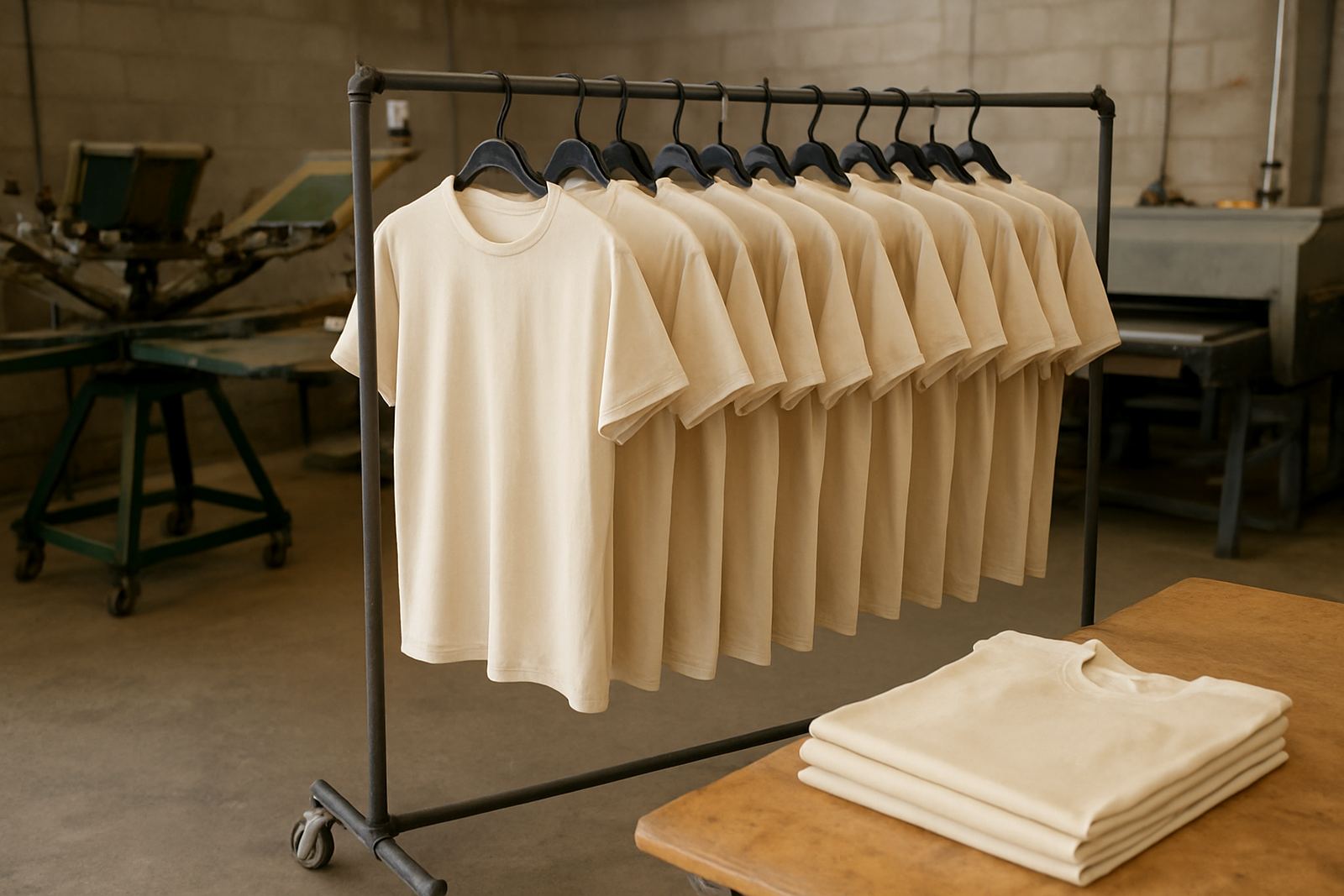
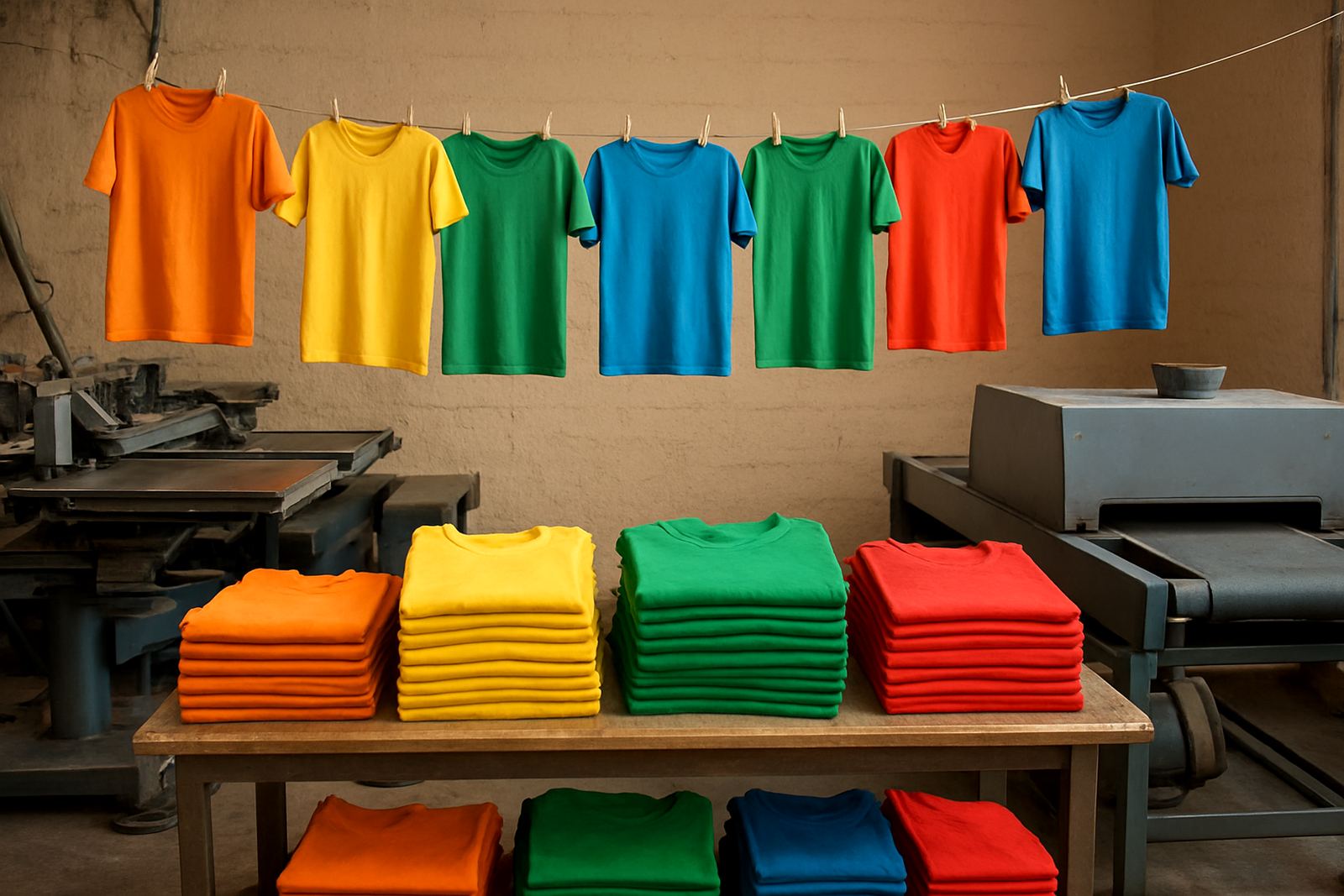
For workwear tops, print choice is not just about appearance, it is about how the garment behaves after washing, stretching and repeated use. We used our screen printing process for the main branding because it gives a solid, even result on larger repeat runs and it handles simple artwork well. Where smaller detail was needed, digital print support was available, but the final garment set was planned to stay practical and uniform.
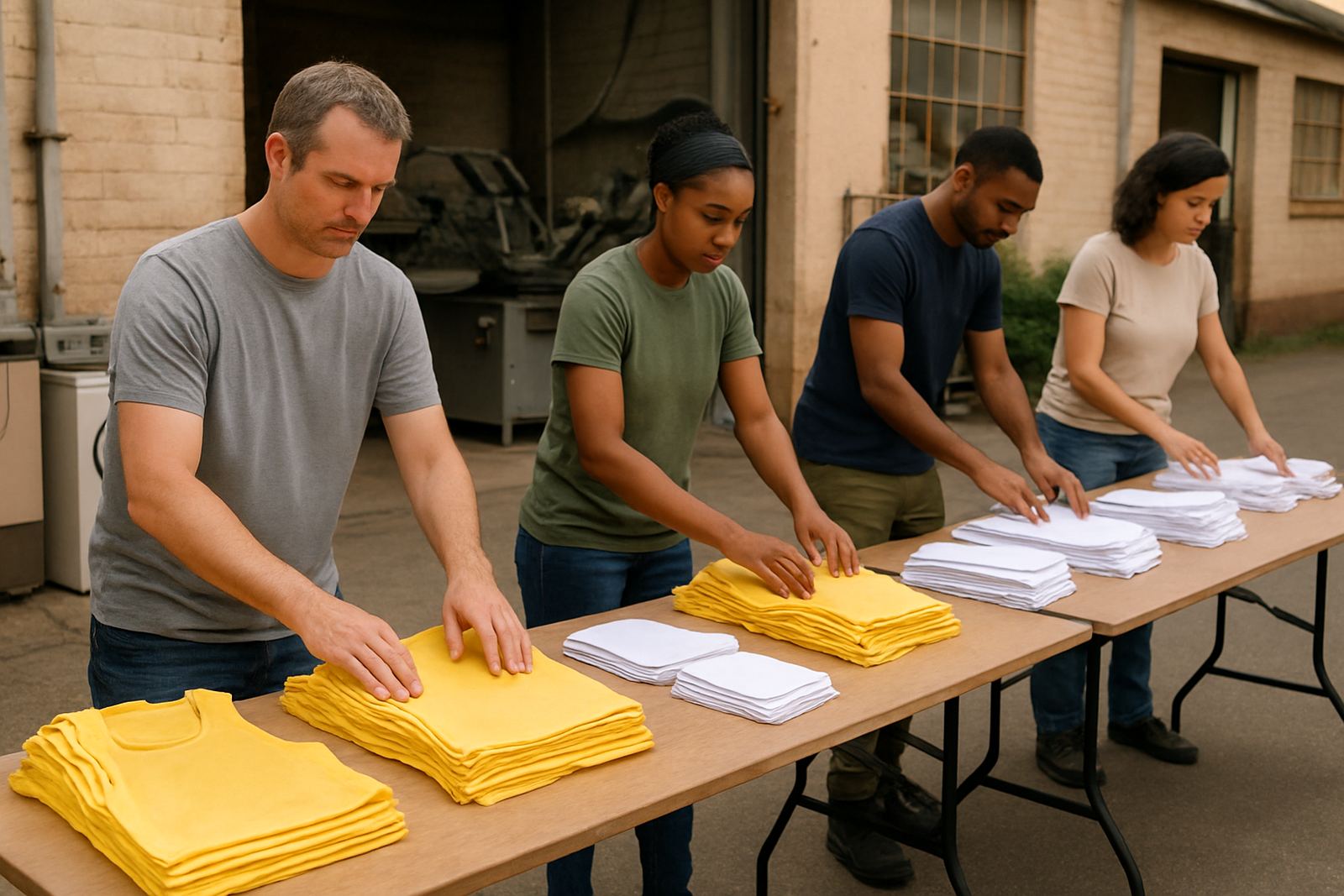
The garments were set up to suit everyday movement, with prints positioned so they would not sit awkwardly under a bag strap or snag point. The tops were checked for print alignment and finish before dispatch, and each size was packed to make issuing easier when the customer received the order. In our climate, especially near the coast, it is worth keeping garments breathable and avoiding overcomplicated decoration that can feel heavy in humid conditions.
We also made sure the print would remain readable after regular laundering. For staff tops that move between the workshop, the truck cab and the office, that matters more than fancy decoration. The result was a plain, strong presentation that looked correct on day one and still held shape after use. It was a tidy job, nothing overdone, just solid workwear that did its job.
From screen making to final packing
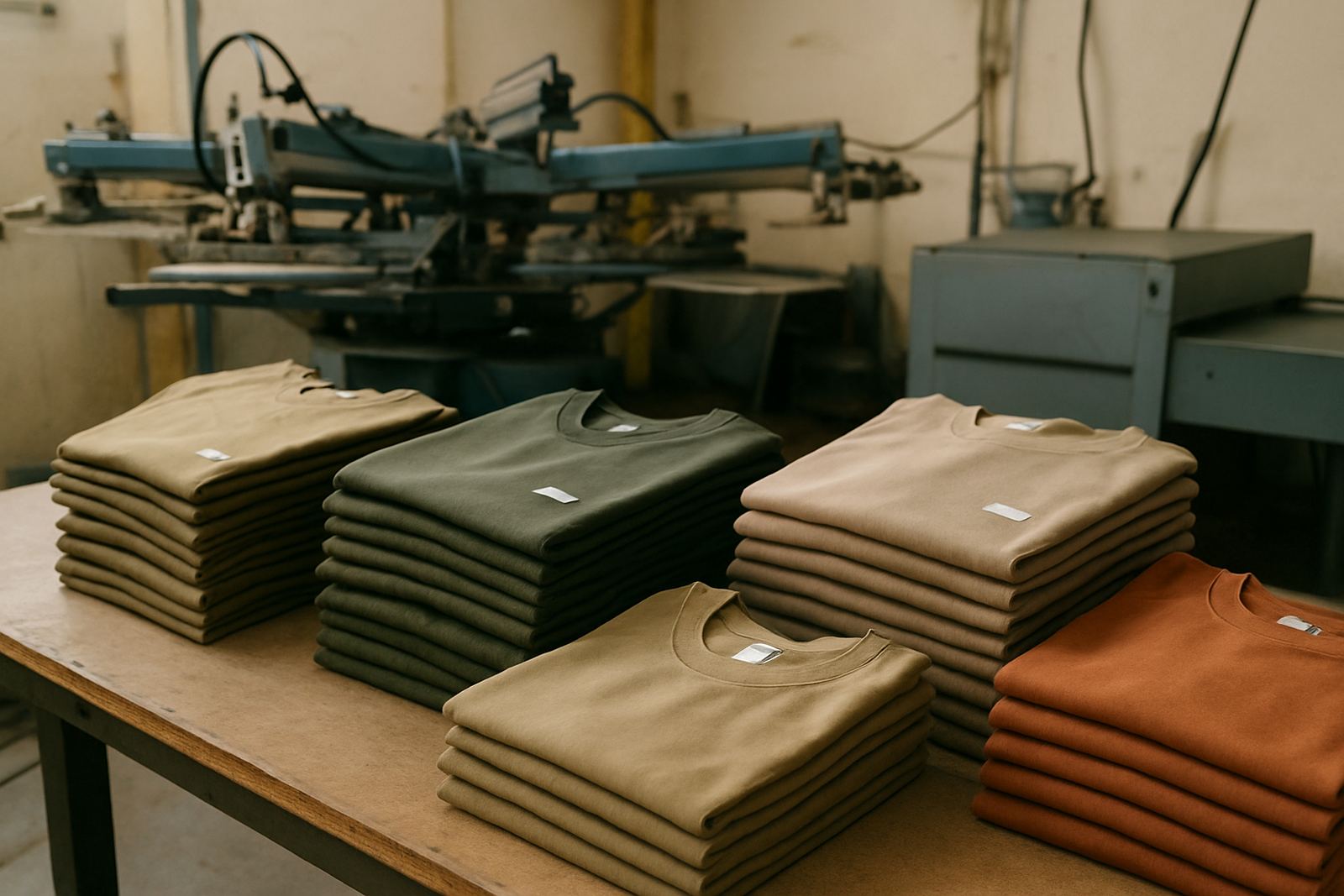
The production sequence was handled in-house so we could keep control over the quality at each stage. That started with screen making, then moved through emulsion coating, exposure, washout and touch-up, followed by registration and test printing before the main run. Having the screen work done on site helped us stay accurate with the logo placement and reduced delay between approval and production.
For a growing team, fast and organised handling is important. We did not want the client waiting on outside steps or back-and-forth with multiple suppliers. The work moved through our standard process in one place, which gave us better control over consistency across sizes and reorders. If the team adds staff later, the same setup can be used again without having to restart from scratch.
- Screen stretching and reclaiming handled in-house
- Emulsion coating and exposure prepared per artwork
- Washout and touch-up completed before print
- Screen storage kept ready for repeat orders
Timeline, turnaround and delivery to Verulam
The project was completed over 2 weeks from artwork confirmation to dispatch. That gave enough time for checking, screen preparation, print production and final packing without rushing the finish. The schedule worked well for the client because they were growing in stages and wanted the first issue ready before the next intake of staff.
Once the tops were printed and packed, we arranged delivery through our usual Durban and KZN courier flow. Verulam sits close enough for a quick turnaround, but we still treat every delivery carefully because workwear needs to arrive sorted, counted and ready to issue. For customers outside Durban, we also courier nationwide, so the same process can serve schools, clubs and businesses in other provinces too.
- Project duration: 2 weeks
- Dispatch: packed and labelled by size
- Delivery: Verulam via courier and local route planning
- Coverage: Durban, KZN and nationwide delivery available
What the client gained from the finished tops
The finished staff tops gave the team a cleaner public-facing appearance and made it easier for supervisors and clients to identify people quickly. That is useful in a logistics setting where different roles move through the same space all day. The order also gave the business a sensible base for future top-ups, so they do not have to redesign or change suppliers each time staffing shifts.
From our side, the main result was a neat repeatable specification. Once the artwork and print positions are set, reorders become easier and quicker. That saves time for the client and keeps the brand consistent across new staff and replacement garments. It also reduces the risk of mixed shades, mismatched logos or poor placement, which can happen when workwear is sourced in a rush.
If we were doing the same project again, we would keep the same approach: confirm the print positions early, check the garment sizes against actual staff numbers, and allow a small buffer for future hires. For a growing logistics team, that is the cleanest way to manage workwear without over-ordering. It also helps when the business is balancing stock, load-shedding delays and the usual pressure of keeping operations moving.
Key facts
| Project | Verulam Workwear Tops |
|---|---|
| Client type | Growing logistics support team |
| Location | Verulam, Durban |
| Garment type | Staff tops |
| Decoration | Screen print with artwork support |
| Turnaround | 2 weeks |