
Start with the first wash after printing
The first wash matters. Let new prints rest for at least 24 to 48 hours before washing, especially in humid Durban weather where fabric can stay damp longer. This gives inks and transfers time to settle properly into the garment and helps reduce early cracking or scuffing.
Turn the garment inside out before it goes into the wash. That small step protects the printed face from rubbing against zips, buttons and other clothes in the machine. If you are handling a school run, club kit or staff uniform set, keep new items separate from heavy towels and jeans for the first few washes.
Wash gently to protect print colour
Use cold or lukewarm water and a gentle wash cycle. Hot water can fade colour faster and make some prints wear sooner, particularly on darker shirts and caps. A mild detergent is best. Strong bleach products and harsh stain removers may lighten the print or leave patchy marks around the artwork.
- Turn garments inside out
- Use cold or lukewarm water
- Choose a mild detergent
- Avoid bleach and strong stain removers
- Wash similar colours together
If a garment has been worn on site, on the sports field or in a kitchen, treat stains early but do not scrub the print area hard. Dab the stain on the fabric around the design first and rinse gently. Hard rubbing can lift ink or damage fine details, especially on small text and line work.
Drying rules for KZN sun and coastal humidity
Strong sun may dry garments quickly but it can also fade prints and weaken fibres over time. In Durban, Ballito and other coastal areas, humidity can slow drying, so it helps to choose a shaded, airy spot with good movement of air. Do not leave printed garments sitting in a wet pile after washing, because that can cause musty smells and mark the print.
Best practice is to air dry garments flat or on a line with the print facing inward if possible. If you use a tumble dryer, keep it on a low heat setting. High heat can shrink cotton, curl edges on some prints and make caps lose shape. For uniforms and branded shirts used every week, line drying usually gives the best life span.
Ironing and heat press care
Never iron directly over the print. Use a cool iron setting and place a clean cloth between the iron and the garment if you need to smooth the front side. Some printed areas can stick to the iron or glaze under high heat, and that damage is usually permanent.
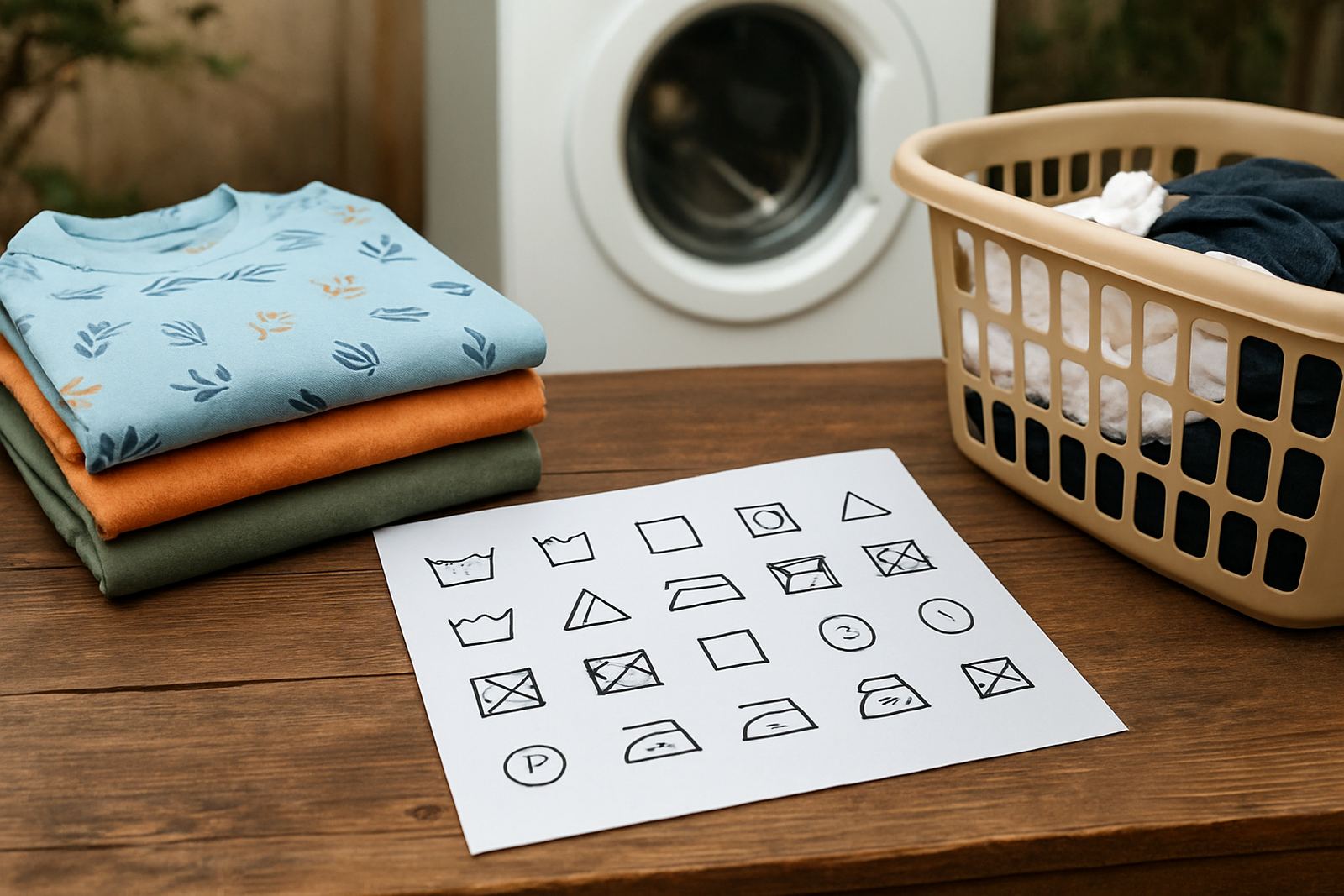
For garments that were heat pressed, keep the press area dry and avoid folding the garment while it is still warm. Heat from an iron, dryer or press can also affect caps and stretch fabrics. If you are unsure how to treat a specific item, check the wash label first and keep heat low. A little caution goes a long way.
Storage for school kits, clubs and work uniforms
Good storage helps prints stay neat between uses. Fold garments once they are fully dry and store them in a clean cupboard or box away from direct sunlight. In humid areas, closed rooms can trap moisture, so it helps to keep storage space dry and aired out where possible.
- Store only fully dry garments
- Keep printed items out of direct sun
- Avoid heavy pressure on folded prints
- Separate clean stock from worn items
- Do not leave caps crushed under heavy bags
For bulk orders used across a school or business, it is worth keeping sizes and styles grouped together. That makes issue and replacement easier, and it helps reduce handling damage during busy terms or month end stock checks.
Quick damage checks before the next wear
A quick inspection before washing or wearing again can save a good garment from further damage. Check for peeling edges, loose threads, cracked print lines or marks from oil and ink. If you catch wear early, you can often slow it down by washing more gently and reducing heat exposure.
For clubs and businesses in Durban, Pietermaritzburg or Pinetown, this is especially useful when a set of garments is rotated often. Separate any item that has a problem so it does not pick up more damage in the machine. If a print has started to lift, do not scrape it. Scraping usually makes it worse and can leave a rough patch on the fabric.
Care checklist for everyday use
Use this simple checklist before and after each wash cycle. It keeps the routine easy for families, teams and staff who need their clothing to last through regular use and local weather.
- Wait 24 to 48 hours before the first wash
- Turn the garment inside out
- Wash in cold or lukewarm water
- Use mild detergent only
- Air dry out of direct sun where possible
- Keep irons and dryers on low heat
- Store fully dry items in a clean, dry place
Following these steps will not make a garment last forever, but it will help keep prints sharper for longer. That matters when you are looking after school shirts, club gear, promotional wear or work uniforms that need to keep looking presentable week after week.