
Why Screen Making Matters Before the First Print
Before a single shirt is loaded, the screen must be prepared properly. That is what screen making means in practice: building the printing surface, blocking the right areas, and opening the fine detail where ink must pass through. If the screen is made badly, you get fuzzy edges, weak solids, poor alignment and wasted stock. If it is done well, the print runs smoother and the same design can be repeated across 20 garments or 2,000 with far less trouble.
For schools in Durban, clubs in Pinetown or businesses in Pietermaritzburg, good screen making helps keep costs under control. It also matters when orders arrive in mixed sizes, with different names, numbers or colours. A clean screen gives better registration and more consistent results, especially on busy runs where there is no time to stop and fix avoidable errors.
- Sharper lettering and cleaner edges on logos
- Less ink bleed on fine lines and small text
- Better repeatability on longer runs
- Less waste from misprints and rework
Films and Artwork: Turning a Design Into a Printing Guide
The process starts with the artwork. Before the screen can be exposed, the design needs to be checked for printability. That means looking at line thickness, image quality, colours, fonts and whether the file will hold up at the size required. If a school crest is too low resolution or a club sponsor logo is supplied as a small web image, it may need vector redrawing or colour separation before film output can begin.
The film is the black image printed from the artwork. It acts like a stencil guide during exposure. Where the film is solid black, light is blocked. Where it is clear, the emulsion on the screen will harden. In simple terms, the film decides what stays closed and what opens up for ink.
- Artwork checking to catch problems early
- Vector redrawing for cleaner lines and scalable logos
- Colour separation for multi-colour printing
- Film output for a precise exposure guide
In Durban, humidity can affect storage and handling, so films and screens need to be kept properly between steps. If they are left in damp conditions, dust and moisture can interfere with the finish.
Emulsion Coating and Exposure: The Screen Learns the Design
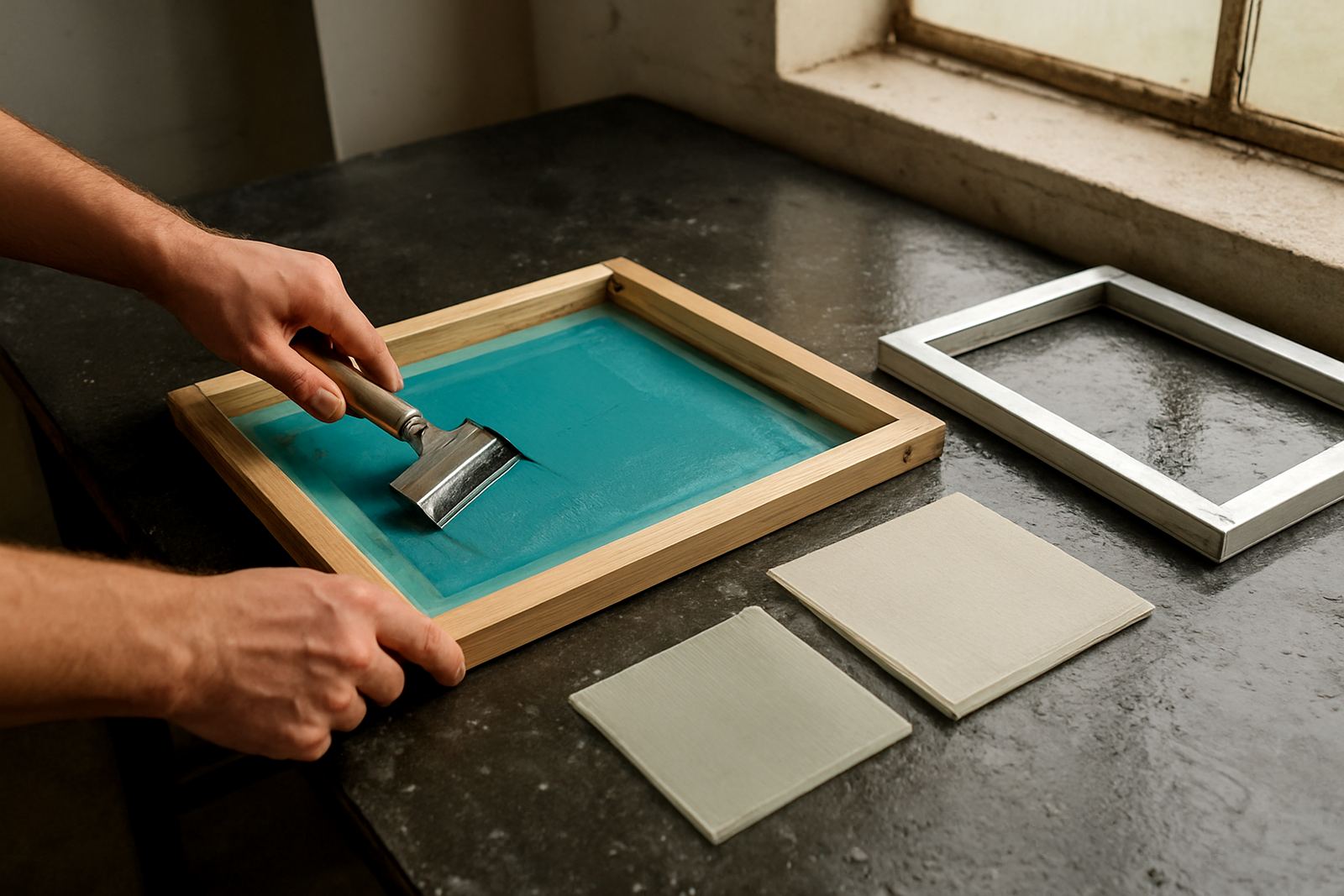
Once the film is ready, the screen is coated with emulsion. This is a light-sensitive layer spread evenly across the mesh. The coating has to be smooth and even, because thick spots or weak patches change the way the stencil opens. After coating, the screen is dried in controlled conditions before exposure.
During exposure, the film is placed against the coated screen and light is applied. The exposed areas of emulsion harden. The parts blocked by the black film stay soft and can later be washed out. That is the moment the screen begins to hold the actual shape of the artwork.
For printers working through load-shedding or with tight turnaround times, consistent exposure matters even more. If the timing is off, the screen may wash out too much or not enough. That can mean broken lettering, pinholes or blocked areas. A proper exposure setup saves time later and reduces frustration on press.
- Frame reclaiming before recoating if the screen has been used before
- Emulsion coating applied evenly for clean stencil depth
- Screen exposure timed to suit the mesh and artwork
- Storage protected from dust, heat and moisture
Washout and Touch-Up: Where the Image Opens Up
After exposure, the screen is washed out. Water removes the soft emulsion in the areas that were protected by the film, leaving open mesh where the ink will pass through. This is the point where the artwork becomes practical. If the washout is rushed, the screen may not clear properly. If it is overdone, fine detail can break down and the stencil may lose strength.
Touch-up work follows if needed. Small pinholes are blocked, edges are cleaned and weak points are checked before the screen goes to print. This stage is especially important for white ink, fine type, small registration marks and any design with tight spacing. A screen that is not touched up can cause tiny faults that show up in every impression.
When a run is for a sports club in Ballito or a business order for Durban Central, those small faults can become expensive very quickly. One missed line can spoil a batch. That is why careful washout and touch-up are not optional extras, they are part of getting the job ready.
Registration, Test Printing and Running the Job Right
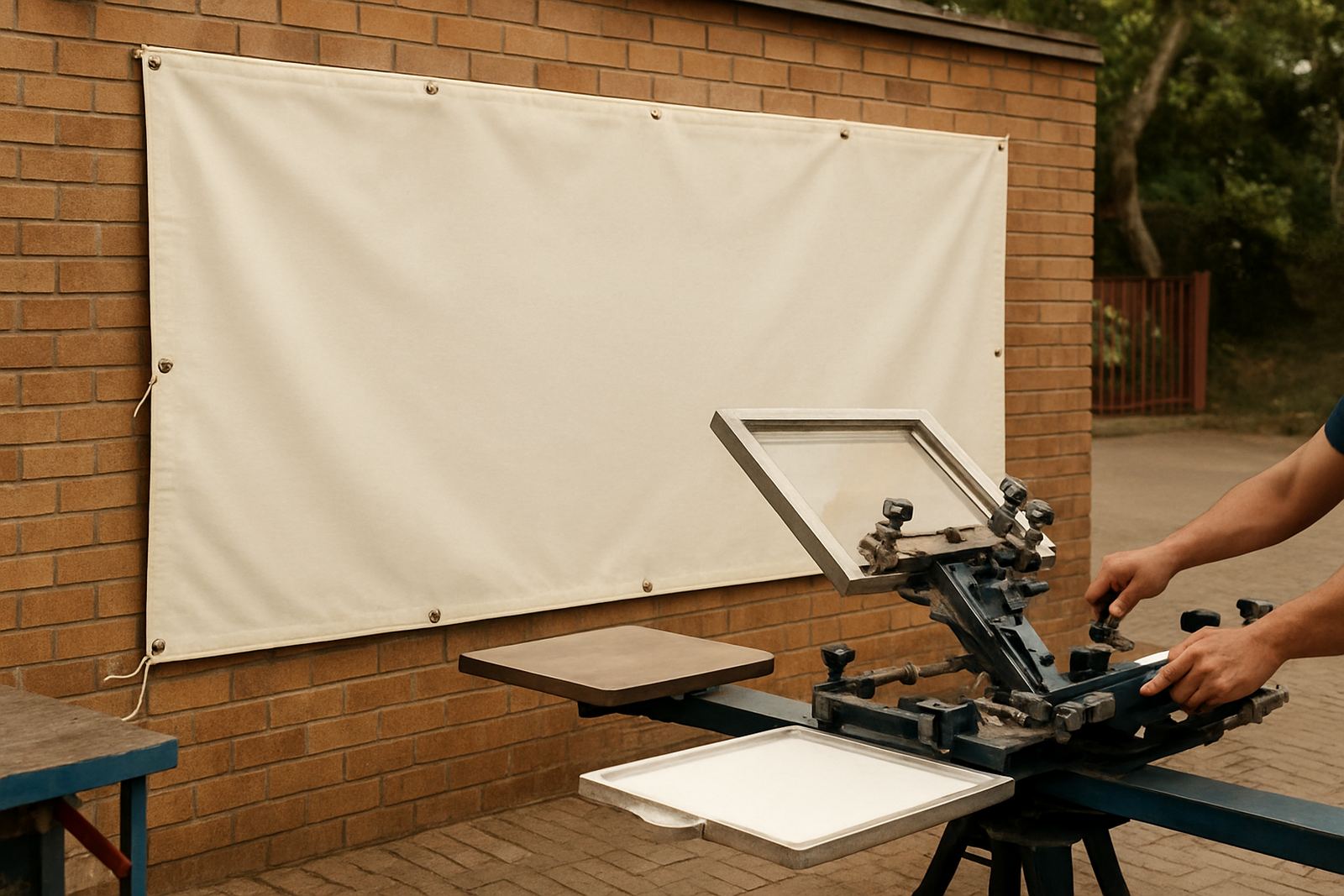
Once the screen is ready, it still has to be set up correctly on press. Screen registration makes sure the print lands in the right place, colour after colour and sheet after sheet. This matters for multi-colour designs, left chest logos, back prints and numbered garments where alignment has to stay neat across the full order.
Test printing comes before the main run so any issues can be corrected before stock is used up. It is a practical step, not a luxury. If the ink is too thick, the design may need adjustment. If the screen is off centre, it can be reset. If the print is too light on a dark shirt, the mesh, ink or stroke may need checking.
- Screen registration for accurate placement
- Test printing to confirm ink flow and image clarity
- Screen storage for repeat orders and reprints
- Careful handling for coastal and inland conditions
For KZN customers, keeping screens stored properly is useful when repeat orders come in later. A club may need another 30 shirts after the first batch. A school may need names added for late entrants. Stored screens save time and keep the artwork consistent from one order to the next.
A Durban Example: From School Event to Finished Garments
Think of a school in Berea ordering T-shirts for a sports day. The logo has two colours, the text is small, and the shirts need to be ready before the weekend. The artwork is checked, the colours are separated, and films are produced for each screen. The screens are coated with emulsion, exposed, washed out and touched up. After test printing, the run begins and the order is packed for delivery, whether it is going to Umbilo, Westville or farther afield by courier.
That is what screen making means in real terms: not a technical word for its own sake, but a chain of careful steps that protects the final print. It is also why different orders need different handling. A single-colour banner, a cap run and a set of branded shirts do not all use the same approach. The screen must suit the job, the ink and the fabric or board surface.
At Screen Spectrum in Umbilo, this work is done in-house for orders of any size. That keeps communication direct, reduces delays and makes it easier to handle fast-moving jobs for schools, clubs and businesses across Durban and KZN.